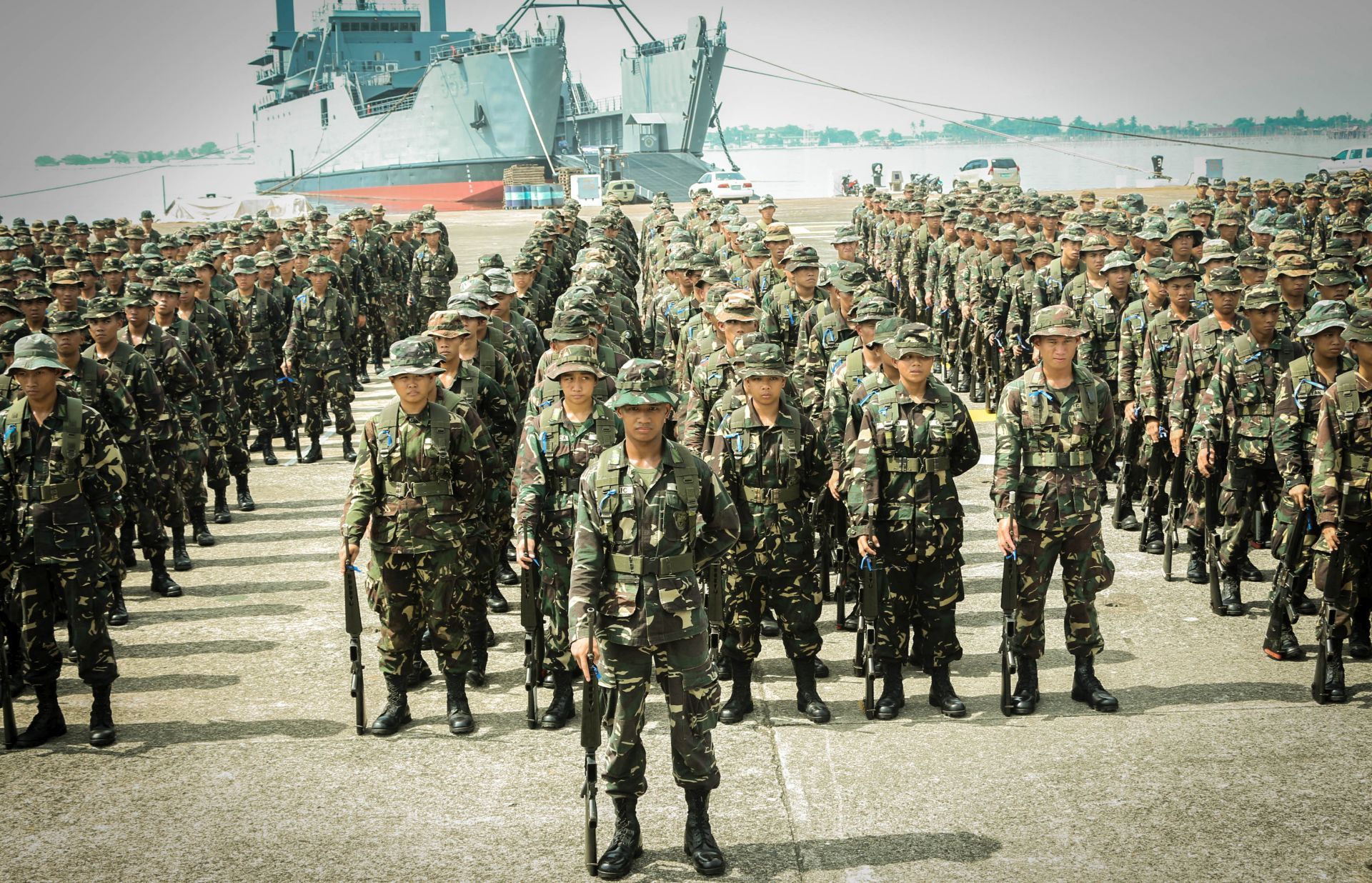
The Philippine Army's history is deeply intertwined with the country's struggle for independence, its defense, and its nation-building efforts. Initially formed during the Philippine Revolution against Spanish colonization in the late 19th century, the Philippine Army has since evolved to become a vital institution in safeguarding the nation's sovereignty and security.
After gaining independence from Spain in 1898, the Philippines faced new challenges, including the Philippine-American War and subsequent colonization by the United States. During this period, various armed groups emerged to resist foreign occupation, laying the groundwork for what would later become the Philippine Army.
The modern Philippine Army traces its roots back to the early 20th century when the United States established a constabulary force to maintain law and order in the newly formed Philippine Commonwealth. With the outbreak of World War II, Filipino soldiers played a crucial role in defending the Philippines against Japanese invasion, showcasing their resilience and bravery in the face of adversity.
Following World War II, the Philippines gained independence from the United States in 1946, leading to the establishment of the Armed Forces of the Philippines (AFP), with the Philippine Army as its ground warfare component. Since then, the Philippine Army has been involved in various conflicts and peacekeeping operations, including the Korean War, Vietnam War, and internal insurgencies.
Today, the Philippine Army remains at the forefront of national defense, tasked with protecting the country's sovereignty, maintaining peace and order, and providing assistance during times of calamities. With a proud history of sacrifice, valor, and service, the Philippine Army continues to uphold its motto "Kagitingan, Katapatan, at Kabayanihan" (Valor, Loyalty, and Patriotism), serving as a symbol of resilience and unity for the Filipino people.
Highlights
Highlighting the importance of the Philippine Army in national defense and security is crucial to understanding its role in safeguarding the sovereignty and integrity of the Philippines. Here's how this significance could be articulated:
The Philippine Army stands as the backbone of the country's defense forces, tasked with protecting its borders, maintaining internal security, and preserving peace and stability within its territory. With a diverse array of capabilities and a highly trained and dedicated force, the Philippine Army plays a pivotal role in deterring external threats and responding to various security challenges.
At its core, the Philippine Army serves as the first line of defense against potential aggressors, ensuring the country's territorial integrity and sovereignty. Through its presence and vigilance, the Army helps deter potential adversaries and safeguards national interests in both peacetime and during times of crisis.
Furthermore, the Philippine Army's role extends beyond traditional military functions, encompassing a wide range of responsibilities such as disaster response, humanitarian assistance, and community engagement. In times of natural disasters, the Army mobilizes its resources and personnel to provide crucial support and aid to affected communities, showcasing its commitment to serving the Filipino people.
Preview
In this comprehensive blog, we will delve into the heart of the Philippine Army, exploring its rich history, vital role in national defense and security, and its enduring commitment to serving the Filipino people. Here's a glimpse of what you can expect:
Organizational Structure: Gain insight into the intricate organizational hierarchy of the Philippine Army, understanding the roles and functions of its various units, commands, and specialized regiments.
Through this in-depth exploration, readers will gain a newfound appreciation for the Philippine Army's unwavering dedication, resilience, and commitment to safeguarding the nation and serving the Filipino people. Join us on this journey as we honor the brave men and women who embody the spirit of strength, valor, and service in the Philippine Army.
Formation of the Philippine Army
The roots of the Philippine Army trace back to the struggle for independence against Spanish colonization in the late 19th century. During this period, various armed groups, collectively known as the Katipunan, emerged to fight for the liberation of the Philippines from colonial rule. One of the most notable organizations was the Katipunan, led by revolutionary figures such as Andres Bonifacio.
As the Philippine Revolution gained momentum, the need for a more organized and unified military force became apparent. In 1896, the Katipunan established the Magdalo faction, which later evolved into the Philippine Revolutionary Army (PRA). Comprised of volunteer fighters from different regions, the PRA played a crucial role in challenging Spanish rule and laying the groundwork for Philippine independence.
Following the Spanish-American War and the Treaty of Paris in 1898, which transferred control of the Philippines from Spain to the United States, the Philippine-American War erupted as Filipino revolutionaries resisted American colonization. During this conflict, which lasted until 1902, Filipino forces fought valiantly against American forces, showcasing their determination and resilience.
In 1901, the United States established the Philippine Constabulary, a paramilitary force tasked with maintaining law and order in the newly formed Philippine Commonwealth. This marked the beginning of a more formalized military structure in the Philippines.
With the outbreak of World War II, the Philippines once again found itself thrust into a struggle for survival, this time against Japanese invasion. Filipino soldiers, alongside American forces, engaged in fierce battles to defend the country, ultimately succumbing to Japanese occupation in 1942.
After World War II, the Philippines regained independence from the United States in 1946, leading to the establishment of the Armed Forces of the Philippines (AFP). The Philippine Army, as the ground warfare component of the AFP, was tasked with defending the nation's sovereignty and maintaining internal security.
Over the decades, the Philippine Army has undergone significant transformation, adapting to changing security threats and challenges. Today, it boasts a modern organizational structure, equipped with advanced weaponry and technology, and comprised of highly trained personnel dedicated to serving the Filipino people.
From its humble beginnings in the struggle for independence to its current role as a cornerstone of national defense, the Philippine Army remains a symbol of strength, valor, and service, embodying the spirit of resilience and patriotism that defines the Filipino nation.
Key Historical Events and Milestones of the Philippine Army
World War II:
- The Battle of Bataan (1942): Filipino and American forces engaged in a valiant defense against Japanese invaders but were eventually forced to surrender after months of intense fighting. This event marked a dark chapter in Philippine history known as the Bataan Death March.
- The Battle of Leyte (1944): Allied forces, including Filipino soldiers under the Philippine Commonwealth Army, launched the liberation of the Philippines from Japanese occupation, landing on the island of Leyte. This campaign marked the beginning of the end of Japanese rule in the Philippines.
- The Battle of Manila (1945): Filipino and American troops fought to liberate the capital city of Manila from Japanese forces in one of the fiercest urban battles of World War II. The battle resulted in significant destruction and loss of life but ultimately led to the liberation of Manila and the Philippines.
Korean War:
- Philippine Expeditionary Forces to Korea (PEFTOK): In response to the United Nations' call for assistance during the Korean War (1950-1953), the Philippines deployed a battalion-sized contingent known as the PEFTOK. Comprised of Filipino soldiers, PEFTOK played a crucial role in defending South Korea against communist aggression and earned praise for their bravery and professionalism on the battlefield.
Internal Conflicts:
- Hukbalahap Rebellion (1946-1954): Following World War II, the Philippines faced internal unrest as the Hukbalahap, or Huk, communist insurgency emerged. The Philippine Army, alongside other security forces, engaged in counterinsurgency operations to suppress the rebellion, ultimately bringing an end to the conflict in the 1950s.
- Moro insurgency: The Philippines has also grappled with insurgencies in Muslim-majority regions of Mindanao, including the Moro National Liberation Front (MNLF) and later the Moro Islamic Liberation Front (MILF). The Philippine Army has been actively involved in efforts to address these conflicts through both military operations and peace negotiations.
Post-Martial Law Era:
- EDSA People Power Revolution (1986): The Philippine Army played a pivotal role in the peaceful overthrow of the authoritarian regime of President Ferdinand Marcos during the EDSA People Power Revolution. Soldiers, along with civilians, converged on EDSA (Epifanio de los Santos Avenue) in Manila to protest against the Marcos regime, leading to his ouster and the restoration of democracy.
- Modernization and Reform: In the aftermath of the EDSA Revolution, efforts were made to professionalize and modernize the Philippine Army, with a focus on enhancing its capabilities, improving human rights practices, and promoting civilian control over the military.
These historical events and milestones underscore the Philippine Army's enduring commitment to defending the nation's sovereignty, maintaining peace and stability, and upholding the democratic principles upon which the Philippines was founded.
Evolution of the Philippine Army's Structure, Equipment, and Training
Structure:
- Colonial Era: During the colonial period, the Philippine Army's structure was heavily influenced by its colonial masters, particularly Spain and the United States. The Philippine Constabulary, established by the Americans in 1901, served as the primary security force, tasked with maintaining law and order in the newly formed Philippine Commonwealth.
- Post-Independence: After gaining independence from the United States in 1946, the Armed Forces of the Philippines (AFP) was established, with the Philippine Army serving as its ground warfare component. The Army's organizational structure underwent several revisions over the years to adapt to evolving security challenges and operational requirements.
Equipment:
- Early Years: In its formative years, the Philippine Army relied on surplus weapons and equipment from its colonial predecessors, as well as donations from allied countries. These included firearms, artillery pieces, and military vehicles acquired from the United States, which played a crucial role during World War II.
- Modernization Efforts: In recent decades, the Philippine Army has embarked on efforts to modernize its equipment and weaponry to enhance its capabilities and effectiveness. This includes the acquisition of new firearms, armored vehicles, artillery systems, communications technology, and surveillance equipment to address emerging threats such as terrorism, insurgency, and territorial defense.
Training:
- Traditional Methods: In the early years of the Philippine Army, training methods were largely influenced by military doctrines inherited from colonial powers. Basic military training focused on infantry tactics, marksmanship, physical fitness, and discipline.
- Professional Development: Over time, the Philippine Army has placed greater emphasis on professional development and continuous training to enhance the skills and capabilities of its personnel. This includes specialized training programs for various military occupational specialties, leadership development courses, and joint exercises with allied nations.
- International Collaboration: The Philippine Army actively participates in joint training exercises, military exchanges, and capacity-building programs with allied countries and international organizations. These collaborations provide opportunities for Philippine Army personnel to learn from their counterparts, exchange best practices, and enhance interoperability in multinational operations.
The evolution of the Philippine Army's structure, equipment, and training reflects its ongoing commitment to adapt to changing security dynamics, uphold operational readiness, and fulfill its mission to defend the nation and serve the Filipino people.
Primary Mission
The Philippine Army's primary mission revolves around the core functions of organizing, training, equipping, and deploying forces to effectively defend the Philippines against external threats, maintain internal security, and contribute to national development. Let's delve into each aspect in detail:
Organize:
- The Philippine Army is responsible for organizing its forces into structured units, commands, and formations capable of executing a wide range of military operations. This includes infantry divisions, artillery brigades, armor regiments, engineering battalions, and support units.
- Organizational structures are designed to optimize command and control, facilitate coordination, and maximize operational effectiveness across different environments, including land, air, and maritime domains.
- Units are organized based on specialized roles and functions, such as combat units trained for offensive and defensive operations, support units providing logistics, medical, and engineering support, and specialized units focusing on reconnaissance, special operations, and disaster response.
Train:
- Training lies at the heart of the Philippine Army's mission, with a strong emphasis on developing the skills, knowledge, and professionalism of its personnel. Training programs are designed to prepare soldiers for the rigors of combat, enhance their proficiency in their respective roles, and foster a culture of discipline, teamwork, and leadership.
- Training encompasses a wide range of activities, including basic military training for new recruits, advanced skills training for specialized roles, leadership development programs for officers and non-commissioned officers, and joint exercises with allied forces.
- Training methodologies evolve in response to emerging threats, technological advancements, and lessons learned from past operations. The Philippine Army continuously evaluates and updates its training curriculum to ensure relevance and effectiveness in dynamic operating environments.
Equip:
- Equipping the Philippine Army with modern and reliable weapons, equipment, and technology is essential for maintaining operational readiness and enhancing combat capabilities. This includes firearms, armored vehicles, artillery systems, communication devices, protective gear, and surveillance equipment.
- Equipment acquisition is guided by strategic objectives, operational requirements, and budgetary constraints. The Philippine Army prioritizes investments in equipment that address current and future threats, enhance survivability and mobility, and support mission success across a diverse range of scenarios.
- The Philippine Army also places importance on maintaining and sustaining its equipment through regular maintenance, repair, and upgrade programs. This ensures the reliability, serviceability, and longevity of its assets throughout their operational lifecycle.
Deploy:
- Deployment of Philippine Army forces involves the strategic positioning and employment of units to fulfill operational objectives and support national defense priorities. Deployments may range from routine patrols and security operations to large-scale exercises and contingency operations in response to crises or conflicts.
- Deployments are based on threat assessments, intelligence reports, operational plans, and directives from higher headquarters. The Philippine Army collaborates closely with other branches of the Armed Forces of the Philippines (AFP), as well as with allied nations and international partners, to coordinate and synchronize joint operations.
- Deployments may occur in various environments, including urban areas, rural communities, remote islands, and maritime territories. Philippine Army forces remain ready to respond swiftly and decisively to any contingency, ensuring the defense and security of the Philippines and its people.
The Philippine Army's primary mission to organize, train, equip, and deploy forces is fundamental to its role as the premier land warfare component of the Armed Forces of the Philippines. Through these core functions, the Philippine Army stands ready to defend the Philippines, safeguard its sovereignty, and uphold peace and security in the nation and its surrounding regions.
The Philippine Army's Roles
National Defense:
- As a key component of the Armed Forces of the Philippines (AFP), the Philippine Army plays a critical role in national defense by safeguarding the sovereignty and territorial integrity of the Philippines.
- The Philippine Army is responsible for defending the country against external threats, including aggression, invasion, and territorial incursions. It maintains a robust posture to deter potential adversaries and is prepared to respond swiftly and decisively to any threat to national security.
- Through joint operations with other branches of the AFP, as well as collaboration with allied nations and international partners, the Philippine Army contributes to collective defense efforts and regional security cooperation in the Asia-Pacific region.
Internal Security Operations:
- The Philippine Army is actively involved in maintaining internal security and combating various forms of threats and challenges within the country's borders.
- This includes counterinsurgency operations against armed rebel groups, such as the New People's Army (NPA) and other communist insurgents, as well as terrorist organizations like Abu Sayyaf Group (ASG), Bangsamoro Islamic Freedom Fighters (BIFF), and other extremist elements.
- The Philippine Army conducts security patrols, area clearing operations, intelligence gathering, and civic-military activities to address the root causes of insurgency and terrorism, restore peace and stability in affected areas, and win the trust and support of local communities.
Humanitarian Assistance and Disaster Response (HADR):
- In times of natural disasters, calamities, and humanitarian crises, the Philippine Army plays a vital role in providing assistance, relief, and support to affected communities.
- The Philippine Army mobilizes its personnel, assets, and resources to conduct search and rescue operations, distribute relief goods, provide medical assistance, and restore critical infrastructure in disaster-stricken areas.
- Through its quick response capabilities and close coordination with other government agencies, non-governmental organizations (NGOs), and international partners, the Philippine Army contributes to saving lives, alleviating suffering, and rebuilding communities devastated by disasters such as typhoons, earthquakes, floods, and volcanic eruptions.
The Philippine Army's multifaceted roles in national defense, internal security operations, and humanitarian assistance and disaster response underscore its commitment to serving the Filipino people and promoting peace, stability, and prosperity in the Philippines and its surrounding regions.
Contribution to Peacekeeping
The Philippine Army plays a significant role in peacekeeping efforts both domestically and internationally, contributing to stability, conflict resolution, and the promotion of peace and security. Here's a discussion on how the Philippine Army contributes to peacekeeping efforts:
Domestically:
- Internal Conflict Resolution: The Philippine Army is actively involved in addressing internal conflicts and insurgencies within the country. By conducting counterinsurgency operations and engaging with rebel groups through peace negotiations, the Philippine Army works to resolve underlying grievances, address socio-economic disparities, and promote reconciliation and lasting peace.
- Humanitarian Assistance and Disaster Response (HADR): The Philippine Army's rapid response capabilities are instrumental in providing humanitarian assistance and disaster relief during natural disasters and calamities. By mobilizing its personnel, resources, and equipment, the Philippine Army assists affected communities, saves lives, and facilitates the recovery and rebuilding process in disaster-stricken areas.
Internationally:
- United Nations Peacekeeping Missions: The Philippine Army actively participates in United Nations (UN) peacekeeping missions, contributing troops, expertise, and logistical support to multinational efforts aimed at maintaining peace and stability in conflict-affected regions around the world. Philippine Army personnel serve in various capacities, including peacekeepers, military observers, and staff officers, performing tasks such as monitoring ceasefires, protecting civilians, and supporting humanitarian operations.
- Regional Peacekeeping Initiatives: Beyond UN missions, the Philippine Army engages in regional peacekeeping initiatives and security cooperation efforts within the Asia-Pacific region. By collaborating with neighboring countries and regional organizations, such as the Association of Southeast Asian Nations (ASEAN), the Philippine Army contributes to regional stability, confidence-building measures, and conflict prevention efforts.
Training and Capacity Building:
- The Philippine Army's involvement in peacekeeping efforts extends beyond deployment to include training and capacity-building programs for its personnel and partner nations. Through specialized training courses, exercises, and exchanges, the Philippine Army shares its expertise in peacekeeping operations, conflict resolution, and humanitarian assistance with other militaries and security forces.
- By enhancing the capabilities of its own troops and fostering partnerships with allied nations, the Philippine Army strengthens regional peacekeeping capacity, promotes interoperability, and contributes to the global peacekeeping architecture.
The Philippine Army's contributions to peacekeeping efforts, both domestically and internationally, reflect its commitment to upholding peace, security, and stability. Whether addressing internal conflicts, providing disaster relief, or participating in peacekeeping missions abroad, the Philippine Army plays a vital role in promoting peace and advancing the common good of humanity.
Organizational Hierarchy
The organizational hierarchy of the Philippine Army is structured to facilitate command and control, optimize operational effectiveness, and fulfill its mission to defend the nation and serve the Filipino people. Here's a breakdown of the Philippine Army's organizational hierarchy, including its major units, commands, and divisions:
Headquarters, Philippine Army (HPA):
The Headquarters, Philippine Army serves as the central command and administrative headquarters responsible for overseeing the overall operations, training, and administration of the Philippine Army.
It is headed by the Commanding General, Philippine Army (CGPA), who is the senior officer responsible for the leadership and direction of the Philippine Army.
Philippine Army Major Units:
a. Infantry Division:
The Philippine Army has several infantry divisions, each comprising multiple infantry brigades and support units.
Infantry divisions are the primary maneuver elements of the Philippine Army, tasked with conducting offensive and defensive operations on land.
b. Armor Division:
The Armor Division specializes in armored warfare, utilizing tanks, armored personnel carriers (APCs), and other armored vehicles to support ground operations.
Armor divisions provide mobile firepower and protection, enhancing the Philippine Army's capabilities in armored warfare.
Philippine Army Commands:
a. Northern Luzon Command (NOLCOM):
NOLCOM is responsible for military operations and security in Northern Luzon, including the Cordillera Administrative Region (CAR), Ilocos Region, and Cagayan Valley.
b. Southern Luzon Command (SOLCOM):
SOLCOM is tasked with military operations and security in Southern Luzon, covering the Bicol Region, CALABARZON (Region IV-A), and MIMAROPA (Region IV-B).
c. Western Mindanao Command (WESTMINCOM):
WESTMINCOM has jurisdiction over military operations and security in Western Mindanao, including the Zamboanga Peninsula and the islands of Basilan, Sulu, and Tawi-Tawi.
d. Eastern Mindanao Command (EASTMINCOM):
EASTMINCOM is responsible for military operations and security in Eastern Mindanao, covering the Davao Region, Caraga Region, and parts of Soccsksargen and Northern Mindanao.
Specialized Units:
The Philippine Army also includes specialized units dedicated to specific roles and functions, such as special forces, artillery, engineering, aviation, intelligence, and logistics.
Specialized units enhance the Philippine Army's capabilities in areas such as reconnaissance, combat engineering, fire support, and sustainment operations.
Overall, the Philippine Army's organizational hierarchy is designed to provide a clear chain of command, efficient operational structure, and effective utilization of resources to fulfill its mission of defending the Philippines and serving the Filipino people.
Roles and Functions of Each Major Component of the Philippine Army
Infantry:
- The infantry serves as the backbone of the Philippine Army, comprising soldiers trained and equipped for ground combat operations.
- Roles and functions include engaging enemy forces in close combat, seizing and holding territory, conducting reconnaissance and surveillance, and providing security for key installations and population centers.
- Infantry units operate across varied terrain and environments, including urban areas, jungles, mountains, and coastal regions, adapting their tactics and techniques to meet operational requirements.
Artillery:
- Artillery units provide indirect fire support to ground forces, utilizing a variety of artillery pieces, such as howitzers, mortars, and rocket launchers.
- Roles and functions include providing suppressive fire against enemy positions, conducting counter-battery fire to neutralize enemy artillery, and supporting offensive and defensive operations with precision and area fires.
- Artillery units also play a crucial role in providing fire support for maneuvering forces, conducting counterinsurgency operations, and conducting counter-rocket, artillery, and mortar (C-RAM) missions to protect friendly forces and installations from enemy indirect fire.
Armor:
- The armor component of the Philippine Army specializes in armored warfare, utilizing tanks, armored personnel carriers (APCs), and other armored vehicles to conduct offensive and defensive operations.
- Roles and functions include providing mobile firepower and protection, conducting armored reconnaissance, exploiting breakthroughs in enemy defenses, and supporting infantry units in maneuver warfare.
- Armor units are often employed as part of combined arms teams, integrating infantry, artillery, and other combat support elements to achieve tactical and operational objectives on the battlefield.
Engineering:
- Engineering units provide combat engineering support to maneuver forces, enabling mobility, counter-mobility, and survivability on the battlefield.
- Roles and functions include constructing and repairing roads, bridges, and fortifications, clearing obstacles and mines, conducting route clearance operations, and providing general engineering support to combat units.
- Engineering units also play a vital role in humanitarian assistance and disaster response (HADR) operations, conducting search and rescue missions, clearing debris, and restoring critical infrastructure in disaster-affected areas.
Support Services:
- Support services encompass a wide range of functions essential for sustaining military operations and supporting combat forces in the field.
- Roles and functions include logistics, transportation, medical services, communications, intelligence, and administration.
- Support services ensure that combat units are properly equipped, supplied, and maintained, that personnel receive medical care and administrative support, and that essential services such as communications and intelligence are provided to command and control elements.
Each major component of the Philippine Army plays a critical role in ensuring the effectiveness, readiness, and success of military operations, working together as part of a cohesive and integrated force to defend the Philippines and serve the Filipino people.
Specialized Units within the Philippine Army
Special Forces:
- The Special Forces Regiment (Airborne), also known as the "Green Berets," is a highly trained and elite unit tasked with conducting unconventional warfare, special reconnaissance, direct action, and counterterrorism operations.
- Special Forces soldiers undergo rigorous training in various specialized skills, including parachuting, combat diving, marksmanship, demolitions, and foreign language proficiency.
- Special Forces units are capable of operating behind enemy lines, deep within hostile territory, and in austere environments to accomplish strategic objectives and support national security objectives.
Airborne:
- The Airborne Regiment is a specialized unit trained in airborne operations, including parachute assault, airfield seizure, and vertical envelopment tactics.
- Airborne soldiers undergo extensive training in parachute operations, air assault techniques, and airborne infantry tactics to conduct rapid insertion and deployment into contested or inaccessible areas.
- Airborne units are capable of conducting a wide range of missions, including reconnaissance, raiding, and seizing key objectives to support offensive operations and enhance the Philippine Army's mobility and flexibility.
Scout Ranger Regiment:
- The Scout Ranger Regiment is a specialized light infantry unit renowned for its expertise in reconnaissance, counterinsurgency, and direct action operations.
- Scout Rangers undergo grueling training in jungle warfare, small unit tactics, survival skills, and close quarters combat to operate effectively in complex and hostile environments.
- Scout Rangers are often deployed to conduct long-range patrols, ambushes, raids, and search and destroy missions against enemy forces, insurgents, and terrorist groups.
Special Operations Command (SOCOM):
- Special Operations Command (SOCOM) oversees the Philippine Army's specialized units, including the Special Forces, Airborne, and Scout Ranger Regiments, as well as other elite units such as the Light Reaction Regiment (LRR) and the Special Operations Command (SOCOM).
- SOCOM units are tasked with conducting a wide range of specialized missions, including counterterrorism, hostage rescue, and unconventional warfare, to support national security objectives and address emerging threats.
These specialized units within the Philippine Army represent the pinnacle of military professionalism, skill, and capability, embodying the values of courage, commitment, and excellence in service to the Filipino people.
Training Programs of the Philippine Army
Basic Military Training (BMT):
- Basic Military Training is the initial phase of training undergone by all recruits upon entry into the Philippine Army.
- BMT focuses on developing essential military skills, discipline, physical fitness, and mental resilience necessary for military service.
- Recruits undergo rigorous physical training, drill instruction, weapons handling, and classroom instruction on military subjects such as military customs and courtesies, basic tactics, and first aid.
Advanced Individual Training (AIT):
- After completing Basic Military Training, soldiers proceed to Advanced Individual Training to specialize in specific military occupational specialties (MOS).
- AIT provides in-depth instruction and hands-on training in specialized skills such as infantry tactics, artillery operations, engineering techniques, medical procedures, communications systems, and logistics procedures.
- Training programs vary depending on the soldier's assigned MOS, with emphasis placed on mastering the knowledge, skills, and techniques required to perform their duties effectively.
Specialized Courses and Schools:
- Philippine Army personnel have the opportunity to attend a variety of specialized courses and schools to further enhance their skills and qualifications.
- Specialized courses cover a wide range of subjects, including airborne operations, special forces training, sniper tactics, combat diving, explosive ordnance disposal (EOD), jungle warfare, and mountain warfare.
- These courses are conducted by specialized training centers and schools within the Philippine Army, as well as through partnerships with allied nations and international organizations.
Leadership Development Programs:
- The Philippine Army places a strong emphasis on developing leadership skills and cultivating future leaders among its ranks.
- Leadership development programs are designed to identify, train, and mentor promising officers and non-commissioned officers (NCOs) for leadership roles within the organization.
- Leadership training includes courses on leadership principles, decision-making, problem-solving, troop leading procedures, and ethical leadership, preparing soldiers to lead and inspire their subordinates in challenging and dynamic environments.
Continuous Professional Development:
- Philippine Army personnel are encouraged to pursue continuous professional development throughout their military careers.
- This includes attending advanced courses, seminars, workshops, and academic programs to broaden their knowledge, skills, and perspectives.
- Continuous professional development is essential for staying current with evolving technologies, tactics, and best practices, as well as for preparing soldiers for higher levels of responsibility and leadership within the Philippine Army.
The rigorous training programs of the Philippine Army are designed to produce well-trained, disciplined, and highly capable soldiers ready to face the demands of military service and contribute to the defense and security of the Philippines.
Professional Development and Skills Enhancement
Continuous professional development (CPD) and skills enhancement are critical components of maintaining readiness, effectiveness, and adaptability in any profession, including military service. Here's a discussion on the importance of CPD and skills enhancement in the context of the Philippine Army:
Adaptability to Evolving Threats:
- The security landscape is constantly evolving, with new threats, challenges, and technologies emerging regularly. Continuous professional development ensures that Philippine Army personnel remain abreast of these developments and are equipped with the knowledge and skills necessary to effectively respond to evolving threats.
- Skills enhancement programs enable soldiers to stay ahead of adversaries by learning new tactics, techniques, and procedures (TTPs), as well as mastering cutting-edge technologies and equipment.
Operational Readiness and Effectiveness:
- Continuous professional development enhances the operational readiness and effectiveness of Philippine Army units by ensuring that soldiers are proficient in their respective roles and responsibilities.
- Regular training and skills enhancement activities enable soldiers to maintain peak physical fitness, sharp marksmanship, effective communication, and sound decision-making abilities, all of which are essential for success on the battlefield.
Leadership Development:
- CPD and skills enhancement programs play a crucial role in developing the next generation of leaders within the Philippine Army.
- Leadership development initiatives provide officers and non-commissioned officers (NCOs) with the tools, knowledge, and experiences necessary to lead and inspire their subordinates effectively.
- Leadership skills such as decision-making, problem-solving, and emotional intelligence are cultivated through CPD activities, enabling leaders to navigate complex and challenging situations with confidence and competence.
Professionalism and Ethical Conduct:
- Continuous professional development fosters a culture of professionalism, accountability, and ethical conduct within the Philippine Army.
- By emphasizing core values such as integrity, discipline, and respect for human rights, CPD programs reinforce the importance of upholding the highest standards of behavior and conduct among soldiers.
- Skills enhancement activities also provide opportunities for soldiers to develop critical thinking skills and ethical decision-making abilities, enabling them to make principled choices in challenging situations.
Organizational Agility and Innovation:
- CPD and skills enhancement contribute to organizational agility and innovation within the Philippine Army by fostering a culture of learning, experimentation, and adaptation.
- Soldiers who are continuously developing their skills and knowledge are better equipped to identify and capitalize on new opportunities, solve complex problems, and innovate new solutions to emerging challenges.
- By encouraging creativity and fostering a growth mindset among its personnel, the Philippine Army can maintain a competitive edge and stay at the forefront of military excellence in the 21st century.
Continuous professional development and skills enhancement are essential for maintaining readiness, effectiveness, and adaptability within the Philippine Army. By investing in the ongoing growth and development of its personnel, the Philippine Army can ensure that it remains a capable, professional, and respected institution dedicated to defending the Philippines and serving the Filipino people.
Collaboration with International Partners for Training and Capacity Building
The Philippine Army recognizes the importance of collaboration with international partners for training and capacity building to enhance its capabilities, interoperability, and professionalism. Here's an overview of how the Philippine Army engages with international partners for training and capacity building:
Bilateral and Multilateral Exercises:
- The Philippine Army participates in bilateral and multilateral exercises with allied nations and regional partners to enhance military interoperability, share best practices, and strengthen defense cooperation.
- These exercises provide valuable opportunities for Philippine Army personnel to train alongside their counterparts from other countries, exchange tactics, techniques, and procedures (TTPs), and build mutual trust and confidence through joint training activities.
Joint Training Programs:
- The Philippine Army collaborates with foreign militaries and defense institutions to conduct joint training programs focused on specific military skills, capabilities, and operational requirements.
- Joint training programs cover a wide range of areas, including counterterrorism, counterinsurgency, peacekeeping operations, disaster response, and humanitarian assistance.
- These programs often include classroom instruction, field exercises, simulations, and scenario-based training designed to simulate real-world situations and enhance soldiers' readiness and effectiveness.
Military Education and Professional Development:
- The Philippine Army sends officers and enlisted personnel to attend military education and professional development courses abroad to broaden their knowledge, skills, and perspectives.
- Courses may include leadership development programs, staff colleges, specialized training schools, and advanced technical courses offered by foreign military academies, training centers, and institutions.
- Military education abroad provides Philippine Army personnel with exposure to different training methodologies, doctrinal concepts, and cultural experiences, enriching their professional development and enhancing their effectiveness as military leaders and practitioners.
Equipment and Technology Transfer:
- The Philippine Army collaborates with international partners to acquire and transfer equipment, technology, and expertise to enhance its operational capabilities and modernize its force structure.
- Through foreign military sales (FMS), military assistance programs, and defense cooperation agreements, the Philippine Army gains access to advanced weapons systems, communications equipment, surveillance technology, and logistical support.
- International collaboration in equipment and technology transfer enables the Philippine Army to keep pace with evolving security challenges, improve its operational effectiveness, and enhance its ability to protect the Philippines and its interests.
Peacekeeping and Stabilization Operations:
- The Philippine Army contributes troops, expertise, and logistical support to United Nations (UN) peacekeeping missions and other international stabilization efforts to promote peace and security in conflict-affected regions around the world.
- Participation in peacekeeping operations provides Philippine Army personnel with valuable training and experience in multinational operations, cultural awareness, conflict resolution, and humanitarian assistance.
- Collaboration with international partners in peacekeeping and stabilization operations demonstrates the Philippines' commitment to global peace and security and strengthens its role as a responsible member of the international community.
Collaboration with international partners for training and capacity building is essential for the Philippine Army to enhance its capabilities, readiness, and professionalism in addressing contemporary security challenges and fulfilling its role in national defense and security. By leveraging international cooperation and leveraging shared expertise and resources, the Philippine Army can strengthen its position as a credible and effective military force dedicated to protecting the Philippines and promoting regional and global stability.
The Philippine Army's Arsenal
Firearms:
Infantry Rifles:
- The Philippine Army's standard-issue infantry rifle is the M16 series, including variants such as the M16A1 and M16A2. These rifles are widely used by infantry units for their reliability, accuracy, and versatility.
- In recent years, the Philippine Army has also acquired newer rifles such as the M4 carbine and the Remington R4, which offer improved ergonomics, modularity, and performance.
Squad Automatic Weapons (SAW):
- The Philippine Army employs squad automatic weapons such as the M249 light machine gun (LMG) to provide suppressive fire and enhance the firepower of infantry squads.
- The M249 is known for its high rate of fire, sustained firepower, and reliability in combat situations.
Sniper Rifles:
- Sniper rifles play a vital role in providing long-range precision fire support and conducting reconnaissance and surveillance operations.
- The Philippine Army utilizes sniper rifles such as the Remington 700 and the Barrett M82A1, which are capable of engaging targets at extended ranges with exceptional accuracy and lethality.
Vehicles:
Armored Personnel Carriers (APCs):
- The Philippine Army operates various types of armored personnel carriers, including the M113 armored personnel carrier, the V-150 Commando, and the Simba armored vehicle.
- APCs provide protected mobility for infantry units, allowing them to transport troops, conduct reconnaissance, and provide fire support in combat operations.
Main Battle Tanks (MBTs):
- The Philippine Army operates a fleet of main battle tanks, including the M60 Patton and the newer South Korean-made K1A1 and K2 Black Panther MBTs.
- MBTs are utilized for armored warfare, engaging enemy armor, fortifications, and providing firepower in offensive operations.
Artillery:
Towed Howitzers:
- The Philippine Army operates towed artillery systems such as the M101 105mm howitzer and the M114 155mm howitzer for providing indirect fire support to ground forces.
- Towed howitzers are versatile weapons capable of delivering accurate and lethal firepower over long distances.
Self-Propelled Artillery:
- The Philippine Army also operates self-propelled artillery systems such as the M109A5 155mm howitzer, which provides enhanced mobility and firepower compared to towed howitzers.
- Self-propelled artillery units are utilized for rapid deployment, fire support, and maneuver warfare.
Communication Systems:
Radios:
- The Philippine Army utilizes a range of radio communication systems for command and control, including handheld radios, vehicle-mounted radios, and base station radios.
- These radios provide secure voice and data communication capabilities for coordinating military operations and maintaining situational awareness.
Satellite Communication (SATCOM):
- The Philippine Army employs satellite communication systems to extend communication capabilities over long distances and in remote or austere environments.
- SATCOM systems enable reliable and secure communication for command and control, intelligence gathering, and coordination with higher headquarters.
The Philippine Army's arsenal encompasses a diverse array of firearms, vehicles, artillery, and communication systems designed to meet the challenges of modern warfare and fulfill its mission of defending the Philippines and serving the Filipino people. Continued investment in modernization and capability enhancement ensures that the Philippine Army remains a credible and effective force for national defense and security.
Recent Acquisitions and Upgrades to Enhance the Philippine Army's Capabilities
Infantry Weapons:
- Acquisition of New Rifles: The Philippine Army has procured new rifles such as the Remington R4 and the Colt M4A1 carbine to replace aging M16A1 rifles. These modern rifles offer improved ergonomics, modularity, and reliability, enhancing the firepower and effectiveness of infantry units.
- Enhanced Sniper Rifles: Recent acquisitions include upgraded sniper rifles such as the Remington 700 and the Barrett M82A1, equipped with advanced optics and accessories to improve accuracy and lethality for precision marksmanship.
Armored Vehicles:
- Acquisition of Light Tanks: The Philippine Army has acquired new light tanks, including the Sabra light tank variant of the M113 armored personnel carrier (APC) and the Turkish-made Kaplan MT modern medium tank. These light tanks provide increased firepower, mobility, and protection for armored units.
- Upgraded Armored Personnel Carriers: Existing armored personnel carriers such as the M113 have undergone upgrades to enhance survivability, mobility, and firepower. Upgrades include the installation of new armor kits, improved suspension systems, and upgraded weapon mounts.
Artillery Systems:
- Procurement of Self-Propelled Howitzers: The Philippine Army has acquired new self-propelled artillery systems, including the K9 Thunder 155mm self-propelled howitzer from South Korea. These modern howitzers provide enhanced mobility, firepower, and survivability for artillery units, improving their capability to provide fire support in various operational scenarios.
- Modernization of Towed Howitzers: Existing towed artillery systems such as the M101 and M114 howitzers have undergone modernization and upgrade programs to extend their service life, enhance accuracy, and improve reliability.
Communication Systems:
- Acquisition of Tactical Radios: The Philippine Army has procured new tactical radio communication systems, including handheld radios, vehicle-mounted radios, and base station radios, to improve command and control capabilities. These modern radios offer secure voice and data communication for real-time situational awareness and coordination.
- Deployment of Satellite Communication (SATCOM) Systems: The Philippine Army has deployed satellite communication systems to extend communication capabilities over long distances and in remote areas. SATCOM systems enable reliable and secure communication for command and control, intelligence gathering, and coordination with higher headquarters.
Unmanned Aerial Vehicles (UAVs):
- Integration of UAVs: The Philippine Army has integrated unmanned aerial vehicles (UAVs) into its operations for reconnaissance, surveillance, and target acquisition. UAVs provide aerial reconnaissance capabilities, enhancing situational awareness and intelligence gathering for ground forces.
Recent acquisitions and upgrades to enhance the Philippine Army's capabilities demonstrate a commitment to modernization, readiness, and effectiveness in addressing contemporary security challenges and fulfilling its mission to defend the Philippines and serve the Filipino people. Continued investment in modern equipment, technology, and training ensures that the Philippine Army remains a credible and effective force for national defense and security.
Efforts to Modernize and Adapt to Emerging Threats and Challenges
Modernization of Equipment and Technology:
- The Philippine Army is actively pursuing modernization initiatives to upgrade its equipment and technology, ensuring that it remains capable of addressing emerging threats and challenges.
- Investments in new firearms, armored vehicles, artillery systems, communication systems, and surveillance technology enhance the Philippine Army's combat capabilities, mobility, and situational awareness on the battlefield.
- By acquiring modern equipment and technology, the Philippine Army can effectively counter evolving threats such as terrorism, insurgency, and territorial disputes, while also enhancing its interoperability with allied forces and regional partners.
Training and Professional Development:
- The Philippine Army places a strong emphasis on training and professional development to prepare its personnel for the complexities of modern warfare and unconventional threats.
- Training programs are designed to cultivate a high level of proficiency in military skills, tactics, and procedures, as well as to develop critical thinking, adaptability, and leadership capabilities among soldiers and officers.
- Specialized training courses focus on areas such as counterterrorism, counterinsurgency, urban warfare, cyber defense, and humanitarian assistance, equipping Philippine Army personnel with the knowledge and skills necessary to confront a wide range of security challenges.
Doctrine and Strategy Development:
- The Philippine Army continuously reviews and updates its doctrine and strategy to reflect changing security dynamics, emerging threats, and lessons learned from past operations.
- By developing flexible and adaptive doctrinal frameworks, the Philippine Army can effectively respond to new and evolving threats, while also leveraging emerging technologies and operational concepts to enhance its operational effectiveness.
- Close collaboration with allied nations, defense partners, and subject matter experts ensures that Philippine Army doctrine remains relevant, responsive, and aligned with best practices in contemporary warfare.
Interagency Cooperation and Joint Operations:
- The Philippine Army collaborates closely with other branches of the Armed Forces of the Philippines (AFP), as well as with law enforcement agencies, government departments, and local government units, to address multifaceted security challenges.
- Joint operations and interagency cooperation enable the Philippine Army to leverage complementary capabilities, resources, and expertise to achieve shared security objectives, such as countering terrorism, transnational crime, and natural disasters.
- By fostering a whole-of-government approach to security, the Philippine Army can effectively coordinate and synchronize efforts across different sectors to mitigate emerging threats and promote stability and resilience in the Philippines.
Engagement with International Partners:
- The Philippine Army actively engages with international partners through defense cooperation agreements, joint exercises, and capacity-building programs to enhance its capabilities and readiness.
- Collaboration with allied nations and regional partners provides opportunities for knowledge sharing, technology transfer, and joint training, enabling the Philippine Army to access advanced equipment, expertise, and best practices in military operations.
- Participation in multinational peacekeeping missions and security cooperation initiatives further strengthens the Philippine Army's interoperability, enhances its regional presence, and contributes to collective security efforts to address shared threats and challenges.
Efforts to modernize and adapt to emerging threats and challenges are essential for ensuring the readiness, effectiveness, and relevance of the Philippine Army in safeguarding the Philippines and its interests. By investing in modernization, training, doctrine development, interagency cooperation, and international engagement, the Philippine Army remains well-positioned to confront evolving security dynamics and contribute to peace, stability, and prosperity in the Philippines and its surrounding regions.
Philippine Army's Vital Role in Providing Assistance During Natural Disasters
Disaster Response Operations:
- The Philippine Army plays a crucial role in disaster response operations, providing rapid assistance and support to affected communities during natural disasters such as typhoons, earthquakes, and floods.
- Army units are deployed to disaster-affected areas to conduct search and rescue operations, evacuate stranded residents, distribute relief goods, and provide medical assistance to the injured.
Search and Rescue Efforts:
- Philippine Army personnel are trained and equipped to conduct search and rescue operations in challenging and hazardous environments.
- Army units deploy specialized teams, including disaster response teams (DRTs) and engineering units, equipped with heavy equipment and specialized tools to clear debris, remove obstacles, and rescue survivors trapped in collapsed structures or isolated areas.
Evacuation and Shelter Management:
- The Philippine Army assists in the evacuation of residents from high-risk areas to safer locations, such as evacuation centers and temporary shelters.
- Army personnel coordinate with local government units and other agencies to provide logistical support, transportation, and security for evacuees, ensuring their safety and well-being during emergencies.
Relief Distribution:
- The Philippine Army facilitates the distribution of relief goods, including food, water, shelter materials, and medical supplies, to affected communities.
- Army units utilize their logistical capabilities and mobility to transport relief supplies to remote and inaccessible areas, reaching communities cut off from transportation networks due to the disaster.
Infrastructure Rehabilitation:
- After the immediate response phase, the Philippine Army assists in the rehabilitation and reconstruction of critical infrastructure damaged by natural disasters.
- Army engineering units deploy to disaster-affected areas to repair roads, bridges, schools, and other essential facilities, restoring vital services and enabling the recovery and rebuilding process to begin.
Coordination and Collaboration:
- The Philippine Army collaborates closely with other government agencies, non-governmental organizations (NGOs), international partners, and the private sector in disaster response efforts.
- Army units participate in interagency coordination meetings, joint task forces, and multi-stakeholder platforms to ensure a unified and coordinated response to natural disasters, maximizing the effectiveness of relief and recovery efforts.
Community Engagement and Capacity Building:
- The Philippine Army engages with local communities to raise awareness about disaster preparedness, mitigation, and response measures.
- Army personnel conduct community-based training programs, disaster risk reduction activities, and simulation exercises to empower communities to be resilient and self-reliant in the face of natural disasters.
The Philippine Army's vital role in providing assistance during natural disasters underscores its commitment to serving the Filipino people and promoting resilience, safety, and security in the Philippines. Through its rapid response capabilities, specialized skills, and collaborative efforts, the Philippine Army remains a dependable and trusted partner in times of crisis, ensuring that affected communities receive the support and assistance they need to recover and rebuild their lives.
Case Studies of Past Operations Showcasing the Philippine Army's Quick Response and Effective Coordination with Other Agencies
Typhoon Haiyan (Yolanda) Response, 2013:
- Typhoon Haiyan, one of the strongest tropical cyclones ever recorded, struck the Philippines in November 2013, causing widespread devastation and loss of life.
- The Philippine Army swiftly mobilized its forces to conduct search and rescue operations, evacuate affected communities, and provide immediate relief to survivors.
- Army units worked in close coordination with other government agencies, international organizations, NGOs, and the private sector to ensure a coordinated and effective response to the disaster.
- Despite the immense scale and complexity of the disaster, the Philippine Army's quick response and collaborative efforts helped save thousands of lives and deliver critical assistance to affected communities.
Bohol Earthquake Response, 2013:
- A 7.2-magnitude earthquake struck the province of Bohol in October 2013, causing extensive damage to infrastructure, homes, and historical landmarks.
- The Philippine Army deployed its personnel and assets to conduct search and rescue operations, assess damage, and provide emergency assistance to affected areas.
- Army engineers worked alongside other government agencies, local authorities, and volunteer groups to clear debris, restore vital services, and assist in the rebuilding efforts.
- Through effective coordination and collaboration, the Philippine Army played a key role in the recovery and rehabilitation of Bohol, helping communities recover from the devastation caused by the earthquake.
Marawi Siege Response, 2017:
- The Marawi Siege, a five-month-long armed conflict between government forces and extremist groups, erupted in May 2017, displacing thousands of residents and causing widespread destruction in the city of Marawi, Lanao del Sur.
- The Philippine Army quickly mobilized its forces to contain the insurgency, rescue civilians trapped in the conflict zone, and restore peace and order in Marawi.
- Army units worked in close coordination with other branches of the Armed Forces of the Philippines (AFP), including the Philippine Air Force and the Philippine Navy, as well as with local government units and international partners, to conduct joint operations and address the security and humanitarian challenges posed by the siege.
- Despite facing a determined and well-armed adversary, the Philippine Army's swift response, bravery, and effective coordination with other agencies contributed to the successful liberation of Marawi and the defeat of the terrorist groups.
These case studies highlight the Philippine Army's ability to respond quickly and effectively to a range of complex and challenging situations, demonstrating its readiness, professionalism, and commitment to serving the Filipino people. Through close coordination with other agencies and stakeholders, the Philippine Army plays a crucial role in safeguarding the nation's security, protecting its citizens, and promoting peace, stability, and resilience in the Philippines.
Importance of Disaster Preparedness and Resilience Training
Mitigating Risk and Reducing Vulnerability:
- Disaster preparedness and resilience training play a crucial role in mitigating the risk of natural and man-made disasters and reducing the vulnerability of communities to their impacts.
- By educating individuals and communities about potential hazards, vulnerabilities, and risk factors, preparedness training helps people make informed decisions and take proactive measures to minimize their exposure to harm.
Saving Lives and Minimizing Losses:
- Effective disaster preparedness and resilience training can save lives by equipping individuals with the knowledge, skills, and resources necessary to respond safely and effectively in emergency situations.
- Training in first aid, search and rescue techniques, evacuation procedures, and disaster response protocols empowers individuals to take immediate action to protect themselves and others, reducing casualties and minimizing losses during disasters.
Strengthening Community Capacity and Coordination:
- Disaster preparedness and resilience training strengthen the capacity of communities to prepare, respond, and recover from disasters by fostering a culture of collaboration, cooperation, and mutual support.
- Training programs bring together diverse stakeholders, including government agencies, civil society organizations, community leaders, and volunteers, to build partnerships, share resources, and coordinate efforts to address common challenges and priorities.
Building Resilience and Adaptability:
- Resilience training focuses on building adaptive capacity and coping mechanisms to withstand and recover from adversity, enabling individuals and communities to bounce back stronger and more resilient in the face of disasters.
- By fostering resilience traits such as flexibility, resourcefulness, and optimism, preparedness training helps people adapt to changing circumstances, overcome obstacles, and maintain a sense of hope and empowerment in challenging times.
Promoting Sustainable Development and Long-Term Planning:
- Disaster preparedness and resilience training promote sustainable development and long-term planning by integrating disaster risk reduction and climate change adaptation into development policies, strategies, and practices.
- By incorporating resilience-building measures into infrastructure development, land use planning, and environmental management, communities can reduce their exposure to hazards, enhance their adaptive capacity, and build more sustainable and resilient societies.
Enhancing National Security and Stability:
- Disaster preparedness and resilience training contribute to enhancing national security and stability by strengthening the resilience of critical infrastructure, essential services, and key institutions to withstand and recover from disasters.
- By reducing the vulnerability of critical assets and systems, preparedness training helps safeguard national interests, protect public safety, and maintain social cohesion and stability in the face of emergencies.
Disaster preparedness and resilience training are essential components of sustainable development, national security, and community well-being. By investing in education, training, and capacity-building initiatives, governments, organizations, and communities can empower individuals and enhance their collective ability to anticipate, prepare for, and respond effectively to disasters, ultimately saving lives, minimizing losses, and promoting a safer, more resilient future for all.
Philippine Army's Collaborations with Other Countries and International Organizations
Bilateral Military Partnerships:
- The Philippine Army maintains close ties with various countries through bilateral military partnerships, defense cooperation agreements, and military-to-military engagements.
- These partnerships facilitate exchanges of military personnel, joint training exercises, equipment donations, and capacity-building initiatives aimed at enhancing interoperability, sharing best practices, and promoting regional security cooperation.
United States:
- The Philippines and the United States have a long-standing defense alliance and a history of close military cooperation.
- The Philippine Army collaborates with the U.S. military through joint exercises such as Balikatan, which focuses on enhancing interoperability, conducting combined arms training, and supporting humanitarian assistance and disaster relief operations.
- U.S. military assistance programs provide training, equipment, and technical support to the Philippine Army, particularly in counterterrorism, counterinsurgency, and maritime security.
Australia:
- The Philippines and Australia have developed strong defense ties and engage in regular military exchanges and cooperation activities.
- The Philippine Army participates in joint exercises with the Australian Defence Force (ADF), such as Exercise Dawn Blitz and Exercise Pitch Black, to enhance interoperability and build capacity in areas such as peacekeeping, disaster response, and counterterrorism.
- Australia provides training and advisory support to the Philippine Army through defense cooperation programs, focusing on areas such as counterinsurgency operations, intelligence sharing, and professional development.
Japan:
- The Philippines and Japan have deepened defense cooperation in recent years, driven by shared security interests and mutual concerns about regional stability.
- The Philippine Army engages in joint training exercises and capacity-building initiatives with the Japan Ground Self-Defense Force (JGSDF), focusing on disaster response, humanitarian assistance, and peacekeeping operations.
- Japan provides technical assistance, equipment donations, and infrastructure development support to the Philippine Army, contributing to its modernization efforts and enhancing its capabilities.
Multilateral Security Cooperation:
- The Philippine Army actively participates in multilateral security cooperation initiatives, such as the ASEAN Defence Ministers' Meeting (ADMM) and the ASEAN Regional Forum (ARF), to promote regional security dialogue and confidence-building measures.
- Through these platforms, the Philippine Army engages with other ASEAN member states, dialogue partners, and international organizations to address common security challenges, share information, and enhance regional cooperation in areas such as counterterrorism, maritime security, and humanitarian assistance.
United Nations Peacekeeping Missions:
- The Philippine Army contributes troops and personnel to United Nations (UN) peacekeeping missions around the world, supporting efforts to maintain peace and security in conflict-affected regions.
- Philippine Army peacekeepers serve in various capacities, including military observers, staff officers, and contingent commanders, in missions such as the UN Mission in South Sudan (UNMISS), the UN Disengagement Observer Force (UNDOF) in the Golan Heights, and the UN Interim Force in Lebanon (UNIFIL).
- Participation in UN peacekeeping missions demonstrates the Philippine Army's commitment to global peace and security and strengthens its interoperability, professionalism, and reputation as a reliable contributor to international peacekeeping efforts.
The Philippine Army's collaborations with other countries and international organizations play a vital role in enhancing its capabilities, interoperability, and professionalism, while also contributing to regional and global security. By engaging in joint training exercises, capacity-building programs, and multilateral security cooperation initiatives, the Philippine Army strengthens its partnerships, builds trust and confidence with allies and partners, and promotes peace, stability, and prosperity in the Philippines and the wider region.
Joint Training Exercises, Military Assistance Programs, and Peacekeeping Missions
Joint Training Exercises:
Balikatan Exercises with the United States:
- The Balikatan Exercises are annual joint military exercises conducted between the Armed Forces of the Philippines (AFP) and the United States military.
- These exercises focus on enhancing interoperability, conducting combined arms training, and supporting humanitarian assistance and disaster relief operations.
- The Philippine Army actively participates in Balikatan Exercises, which include various training scenarios such as amphibious assaults, counterterrorism operations, and live-fire exercises.
Exercise Pitch Black with Australia:
- Exercise Pitch Black is a biennial multinational air combat exercise hosted by the Royal Australian Air Force (RAAF).
- The Philippine Army participates in Exercise Pitch Black alongside other branches of the AFP to enhance interoperability and build capacity in air operations, logistics support, and joint force integration.
- The exercise provides valuable opportunities for Philippine Army personnel to train alongside international partners, share best practices, and develop their skills in a multinational environment.
Military Assistance Programs:
United States Military Assistance:
- The United States provides military assistance to the Philippines through various programs, including the Foreign Military Financing (FMF) program and the Joint US Military Assistance Group (JUSMAG).
- Military assistance from the United States includes training, equipment, and technical support to enhance the capabilities of the Philippine Army in areas such as counterterrorism, maritime security, and disaster response.
- These programs strengthen the partnership between the Philippine Army and the U.S. military and contribute to improving the AFP's readiness and effectiveness in addressing security challenges.
Japan Defense Cooperation:
- Japan provides defense cooperation and assistance to the Philippines through the Japan Self-Defense Forces (JSDF) and the Japan International Cooperation Agency (JICA).
- Military assistance from Japan includes training, equipment donations, and technical support to enhance the capabilities of the Philippine Army in disaster response, peacekeeping operations, and maritime security.
- Collaboration with Japan strengthens the defense partnership between the two countries and promotes regional security and stability.
Peacekeeping Missions:
- The Philippine Army contributes troops and personnel to United Nations peacekeeping missions around the world to support efforts to maintain peace and security in conflict-affected regions.
- Philippine Army peacekeepers serve in various capacities, including military observers, staff officers, and contingent commanders, in missions such as UNMISS, UNDOF, and UNIFIL.
- Participation in UN peacekeeping missions demonstrates the Philippine Army's commitment to global peace and security and enhances its interoperability, professionalism, and reputation as a reliable contributor to international peacekeeping efforts.
Joint training exercises, military assistance programs, and peacekeeping missions play a vital role in enhancing the capabilities, interoperability, and professionalism of the Philippine Army. By participating in these activities, the Philippine Army strengthens its partnerships with other countries and international organizations, builds trust and confidence with allies and partners, and contributes to regional and global security and stability.
Significance of Fostering Strong Relationships with Allied Nations for Regional Security and Stability
Enhanced Defense Capabilities:
- Fostering strong relationships with allied nations allows for the exchange of military expertise, technology, and resources, enhancing the defense capabilities of all parties involved.
- Allied nations can provide training, equipment, and technical assistance to bolster each other's military capabilities, improving readiness and effectiveness in addressing common security challenges.
Interoperability and Joint Operations:
- Strong relationships with allied nations promote interoperability and facilitate joint military operations, enabling seamless coordination and cooperation between different military forces.
- Interoperability allows allied nations to work together more effectively in response to regional security threats, such as terrorism, piracy, and territorial disputes, enhancing collective defense and deterrence capabilities.
Regional Stability and Deterrence:
- Collective security arrangements and alliances contribute to regional stability by deterring aggression, coercion, and destabilizing behavior from potential adversaries.
- Strong relationships with allied nations demonstrate a commitment to mutual defense and solidarity, sending a clear message of unity and resolve to potential adversaries and promoting deterrence against aggression.
Crisis Response and Humanitarian Assistance:
- Allied nations can provide critical support and assistance during crises, natural disasters, and humanitarian emergencies, leveraging their military assets, logistical capabilities, and expertise to deliver timely and effective aid to affected areas.
- Strong relationships with allied nations enable rapid coordination and cooperation in response to humanitarian crises, enhancing the ability to save lives, alleviate suffering, and support recovery efforts in affected communities.
Information Sharing and Intelligence Cooperation:
- Allied nations share information and intelligence to enhance situational awareness, identify emerging threats, and address shared security concerns.
- Information sharing and intelligence cooperation enable allied nations to detect, deter, and disrupt transnational threats such as terrorism, organized crime, and illicit trafficking, enhancing regional security and stability.
Diplomatic and Political Cooperation:
- Strong relationships with allied nations extend beyond the military domain and encompass diplomatic, political, and economic cooperation.
- Allied nations collaborate on a wide range of issues, including regional security architecture, conflict resolution, peacebuilding, and economic development, promoting mutual interests and values and fostering trust and confidence among partners.
Fostering strong relationships with allied nations is essential for enhancing regional security and stability. By working together through collective security arrangements, military alliances, and strategic partnerships, allied nations can enhance defense capabilities, promote interoperability, deter aggression, respond effectively to crises, and contribute to peace, security, and prosperity in the region and beyond.
Analysis of Current Challenges Facing the Philippine Army
Insurgency:
- The Philippine Army continues to face challenges from insurgent groups such as the New People's Army (NPA) and the Bangsamoro Islamic Freedom Fighters (BIFF).
- Insurgency remains a persistent threat in certain regions of the Philippines, particularly in rural areas with historically marginalized communities and limited government presence.
- The Philippine Army is engaged in counterinsurgency operations to address the root causes of insurgency, including poverty, inequality, and social injustice, while also conducting focused military operations to degrade the capabilities of insurgent groups and maintain security in affected areas.
Terrorism:
- The Philippine Army confronts the threat of terrorism from extremist groups such as Abu Sayyaf Group (ASG), Maute Group, and other affiliated organizations with links to international terrorist networks.
- Terrorism poses a significant security challenge in the Philippines, particularly in the southern region of Mindanao, where extremist groups operate and carry out attacks targeting civilians, security forces, and critical infrastructure.
- The Philippine Army works closely with other branches of the Armed Forces of the Philippines (AFP), law enforcement agencies, and international partners to conduct counterterrorism operations, disrupt terrorist networks, and prevent the spread of violent extremism.
Territorial Defense:
- The Philippine Army plays a critical role in safeguarding the country's territorial integrity and maritime sovereignty, particularly in light of ongoing territorial disputes in the South China Sea.
- Territorial defense requires a comprehensive approach that combines military deterrence, maritime surveillance, diplomatic engagement, and international legal mechanisms to protect Philippine sovereignty and assert maritime rights in contested areas.
- The Philippine Army works in coordination with the Philippine Navy and the Philippine Air Force to enhance maritime domain awareness, conduct patrols, and assert presence in Philippine territorial waters and exclusive economic zone (EEZ) to protect national interests and uphold international law.
Capacity and Resource Constraints:
- The Philippine Army faces challenges related to limited resources, budgetary constraints, and logistical limitations that impact its operational readiness and effectiveness.
- Budgetary constraints may restrict investments in modernization, training, and equipment acquisition, hindering the Army's ability to keep pace with evolving security threats and maintain a high level of readiness.
- Addressing capacity and resource constraints requires sustained investment in defense modernization, institutional reform, and capability enhancement initiatives to ensure that the Philippine Army remains capable of fulfilling its mission to defend the Philippines and serve the Filipino people.
Civil-Military Relations:
- The Philippine Army plays a crucial role in supporting civil authorities during disaster response and humanitarian assistance operations, as well as in maintaining peace and order in conflict-affected areas.
- Building and maintaining positive civil-military relations is essential for effective coordination, cooperation, and collaboration between the military and civilian sectors in addressing common security challenges, promoting stability, and supporting national development priorities.
- Strengthening civil-military relations requires transparency, accountability, respect for human rights, and adherence to the rule of law, as well as engagement with local communities, civil society organizations, and government agencies to build trust, foster cooperation, and address shared concerns.
The Philippine Army faces a complex and evolving security environment characterized by insurgency, terrorism, territorial defense challenges, capacity constraints, and civil-military relations issues. Addressing these challenges requires a comprehensive and multifaceted approach that combines military operations, socio-economic development, diplomatic engagement, and international cooperation to promote peace, security, and stability in the Philippines and the wider region.
Strategies for Addressing Challenges and Enhancing the Philippine Army's Capabilities
Comprehensive Counterinsurgency Approach:
- Adopt a holistic counterinsurgency strategy that addresses the root causes of insurgency, including poverty, inequality, and social injustice, through socio-economic development programs, governance reforms, and community empowerment initiatives.
- Conduct focused military operations to degrade the capabilities of insurgent groups, disrupt their networks, and deny them safe havens, while also minimizing civilian casualties and respecting human rights.
- Enhance coordination and collaboration between the Philippine Army, other branches of the Armed Forces of the Philippines (AFP), law enforcement agencies, local government units, and civil society organizations to implement a whole-of-government approach to counterinsurgency.
Counterterrorism Measures:
- Strengthen intelligence gathering, analysis, and sharing capabilities to detect, deter, and disrupt terrorist activities, including financing, recruitment, and logistics support networks.
- Conduct targeted military operations against terrorist groups, including preemptive strikes, surgical raids, and focused kinetic actions to degrade their capabilities and disrupt their operations.
- Enhance border security measures, maritime patrols, and surveillance capabilities to prevent the infiltration of terrorists and the smuggling of weapons and explosives into the country.
Territorial Defense and Maritime Security:
- Invest in the modernization of the Philippine Army's maritime capabilities, including the acquisition of patrol vessels, maritime surveillance aircraft, and coastal radar systems to enhance maritime domain awareness and deterrence capabilities.
- Strengthen cooperation and coordination with the Philippine Navy and the Philippine Coast Guard to conduct joint patrols, maritime exercises, and interoperability training to safeguard Philippine territorial waters and exclusive economic zone (EEZ).
- Advocate for international support and diplomatic engagement to uphold Philippine sovereignty and maritime rights in contested areas of the South China Sea through multilateral forums, legal mechanisms, and peaceful dispute resolution processes.
Defense Modernization and Capability Enhancement:
- Prioritize defense modernization initiatives and allocate sufficient resources and funding to enhance the Philippine Army's capabilities in areas such as intelligence, surveillance, reconnaissance (ISR), precision strike, cyber defense, and special operations.
- Invest in the acquisition of modern equipment, weapons systems, and communication technologies to improve the Army's operational readiness, mobility, firepower, and situational awareness on the battlefield.
- Strengthen training and professional development programs to enhance the skills, expertise, and professionalism of Philippine Army personnel, including specialized training in counterinsurgency operations, counterterrorism tactics, and peacekeeping missions.
Civil-Military Engagement and Community Outreach:
- Strengthen civil-military relations through proactive community engagement, outreach programs, and public information campaigns to build trust, foster cooperation, and address the needs and concerns of local communities.
- Establish mechanisms for dialogue, consultation, and collaboration between the Philippine Army and civil society organizations, non-governmental organizations (NGOs), and grassroots stakeholders to promote inclusivity, transparency, and accountability in security-related initiatives.
- Integrate civil-military engagement and community outreach activities into military operations, disaster response efforts, and humanitarian assistance programs to demonstrate the Philippine Army's commitment to serving the Filipino people and promoting peace, security, and prosperity in the Philippines.
Addressing the challenges facing the Philippine Army and enhancing its capabilities require a comprehensive and integrated approach that combines military operations, socio-economic development, diplomatic engagement, and civil-military cooperation. By implementing these strategies effectively, the Philippine Army can strengthen its resilience, adaptability, and effectiveness in safeguarding the Philippines and its people against emerging security threats and challenges.
The Future Direction of the Philippine Army and Potential Areas for Growth and Development
Enhanced Counterinsurgency Capabilities:
- The Philippine Army is likely to continue prioritizing counterinsurgency efforts, focusing on addressing the root causes of insurgency while conducting targeted military operations against insurgent groups.
- Investments in intelligence, surveillance, and reconnaissance (ISR) capabilities, as well as specialized training in counterinsurgency tactics and techniques, will be crucial for enhancing the Army's effectiveness in combating insurgency and restoring peace and stability in affected areas.
Modernization and Capability Enhancement:
- The Philippine Army is expected to pursue further modernization initiatives to enhance its capabilities in various domains, including cyber defense, electronic warfare, and information operations.
- Investments in advanced weapons systems, armored vehicles, unmanned aerial vehicles (UAVs), and communication technologies will enable the Army to maintain a high level of readiness, mobility, and firepower on the battlefield.
- Specialized training programs in urban warfare, irregular warfare, and asymmetric threats will prepare Philippine Army personnel to confront evolving security challenges effectively.
Strengthened Maritime and Territorial Defense:
- Given the strategic importance of maritime security and territorial defense in the Philippines, the Army is likely to play an increasingly prominent role in safeguarding Philippine territorial waters and exclusive economic zone (EEZ).
- Investments in coastal defense capabilities, amphibious warfare capabilities, and joint maritime operations with the Philippine Navy and the Philippine Coast Guard will be essential for enhancing maritime domain awareness and deterrence capabilities.
- Cooperation with regional partners and allies, particularly in the areas of maritime surveillance, intelligence sharing, and joint patrols, will strengthen the Philippines' ability to protect its sovereignty and maritime interests in contested areas of the South China Sea.
Cyber Defense and Information Warfare:
- Recognizing the growing threat of cyber attacks and information warfare, the Philippine Army is likely to prioritize the development of cyber defense capabilities and information operations capabilities.
- Investments in cybersecurity infrastructure, training in cyber warfare tactics, and collaboration with government agencies, academic institutions, and private sector partners will be crucial for enhancing the Army's resilience to cyber threats and disinformation campaigns.
- Specialized units dedicated to cyber defense, electronic warfare, and psychological operations will play a key role in protecting critical infrastructure, countering propaganda, and maintaining information superiority in future conflicts.
Humanitarian Assistance and Disaster Response:
- The Philippine Army will continue to play a vital role in providing humanitarian assistance and disaster response during natural disasters, including typhoons, earthquakes, and floods.
- Investments in disaster response capabilities, including search and rescue equipment, medical facilities, and logistics support systems, will enable the Army to respond effectively to emergencies and save lives in affected communities.
- Enhanced coordination and collaboration with government agencies, non-governmental organizations (NGOs), and international partners will strengthen the Army's capacity to provide timely and coordinated assistance during humanitarian crises.
The future direction of the Philippine Army is likely to focus on enhancing its capabilities in counterinsurgency, modernization, maritime and territorial defense, cyber defense, and humanitarian assistance and disaster response. By investing in these areas and adapting to emerging security challenges, the Philippine Army will remain a reliable and capable guardian of the Philippines' sovereignty, security, and national interests in the years to come.
Recap of the Philippine Army's Importance and Contributions to National Security and Public Service
The Philippine Army stands as a cornerstone of national security and public service, playing a pivotal role in safeguarding the Philippines' sovereignty, defending its territory, and serving its people. Throughout its history, the Philippine Army has demonstrated unwavering dedication, professionalism, and sacrifice in fulfilling its mission to protect the nation and uphold its core values of honor, duty, and loyalty. Here's a recap of its importance and contributions:
Defense of Sovereignty and Territorial Integrity:
- The Philippine Army is entrusted with the critical task of defending the Philippines' sovereignty and territorial integrity against external threats, aggression, and encroachments.
- Through its commitment to maintaining a credible defense posture and readiness, the Army serves as a deterrent force, deterring potential adversaries and preserving peace and stability in the region.
Upholding Internal Security and Stability:
- Internally, the Philippine Army plays a crucial role in maintaining peace, order, and stability, combating insurgency, terrorism, and other forms of lawlessness that threaten the nation's security and development.
- Through counterinsurgency operations, humanitarian assistance, and disaster response efforts, the Army protects communities, promotes stability, and supports government efforts to address social and economic challenges.
Humanitarian Assistance and Disaster Response:
- The Philippine Army is at the forefront of providing humanitarian assistance and disaster response during natural disasters, calamities, and emergencies.
- With its rapid response capabilities, specialized training, and logistical support systems, the Army saves lives, alleviates suffering, and restores hope in times of crisis, demonstrating its commitment to serving the Filipino people.
Promotion of Peace and Stability:
- As a trusted partner in regional and international security cooperation, the Philippine Army contributes to promoting peace, stability, and cooperation in the Asia-Pacific region and beyond.
- Through participation in peacekeeping missions, joint exercises, and defense engagements with allied nations and international organizations, the Army strengthens alliances, fosters mutual understanding, and advances shared security interests.
Guardians of National Values and Heritage:
- Beyond its operational duties, the Philippine Army embodies the values of courage, patriotism, and selflessness, instilling a sense of pride, identity, and unity among Filipinos.
- As custodians of the nation's military heritage and traditions, the Army preserves the legacy of past heroes and inspires future generations to serve with honor and integrity in defense of the nation.
In summary, the Philippine Army's importance and contributions to national security and public service are immeasurable. With its commitment to duty, sacrifice, and service, the Army remains steadfast in its mission to defend the Philippines, protect its people, and uphold the ideals of freedom, democracy, and sovereignty for generations to come.
Call to Action to Support and Honor the Men and Women of the Philippine Army
As we reflect on the vital role of the Philippine Army in safeguarding our nation's security and serving our people, it is incumbent upon us to show our appreciation, support, and solidarity with the brave men and women who dedicate their lives to defending our freedoms and upholding our values. Here's how you can take action to support and honor the Philippine Army:
Express Gratitude and Recognition:
- Take a moment to express your gratitude and appreciation to members of the Philippine Army for their selfless service and sacrifice.
- Thank them for their dedication, bravery, and commitment to protecting our country and ensuring our safety and security.
Raise Awareness and Understanding:
- Educate yourself and others about the challenges, sacrifices, and contributions of the Philippine Army in defending our nation and promoting peace and stability.
- Share stories, testimonies, and experiences of soldiers and their families to raise awareness and foster understanding of their roles and responsibilities.
Advocate for Support and Resources:
- Advocate for increased support, resources, and funding for the Philippine Army to enhance its capabilities, readiness, and effectiveness in fulfilling its mission.
- Engage with policymakers, community leaders, and stakeholders to prioritize the needs of the military and ensure they have the tools and resources they need to succeed.
Volunteer and Participate:
- Volunteer your time, skills, and resources to support programs and initiatives that benefit members of the Philippine Army and their families.
- Participate in events, ceremonies, and activities that honor and recognize the service and sacrifices of soldiers, veterans, and fallen heroes.
Promote Unity and Solidarity:
- Promote unity, solidarity, and patriotism among fellow Filipinos by standing in solidarity with the Philippine Army and supporting their efforts to defend our nation.
- Encourage dialogue, collaboration, and cooperation between the military and civilian sectors to address common challenges and promote national unity and resilience.
Let us come together as a nation to support and honor the men and women of the Philippine Army who courageously defend our freedom, protect our sovereignty, and uphold the values that define us as Filipinos. By standing with our soldiers and recognizing their sacrifices, we affirm our commitment to a stronger, safer, and more prosperous future for our beloved Philippines.
Explore Further Resources and Stay Informed about the Philippine Army's Ongoing Efforts
Dear Readers,
As we reflect on the significance of the Philippine Army in safeguarding our nation's security and serving our people, we invite you to delve deeper into the remarkable stories, achievements, and ongoing efforts of the brave men and women who comprise this esteemed institution.
To learn more about the Philippine Army's rich history, diverse missions, and contributions to national security and public service, we encourage you to explore further resources, including:
Official Websites and Social Media Channels:
- Visit the official website of the Philippine Army (www.army.mil.ph) to access news updates, press releases, and information about the Army's organization, units, and activities.
- Follow the Philippine Army on social media platforms such as Facebook, Twitter, and Instagram to stay informed about the latest developments, events, and initiatives.
Books, Articles, and Publications:
- Explore books, articles, and publications that provide insights into the Philippine Army's history, operations, and role in national defense and security.
- Look for scholarly works, memoirs, and firsthand accounts written by soldiers, historians, and experts on military affairs to gain a deeper understanding of the Army's challenges and achievements.
Documentaries and Multimedia Content:
- Watch documentaries, films, and multimedia content that highlight the Philippine Army's missions, training exercises, and humanitarian activities.
- Look for online platforms, streaming services, and television programs that feature stories of courage, sacrifice, and service by soldiers serving in the Philippine Army.
Public Events and Exhibitions:
- Attend public events, exhibitions, and commemorations organized by the Philippine Army to honor fallen heroes, celebrate milestones, and showcase its capabilities and achievements.
- Participate in military ceremonies, open houses, and community outreach programs to interact with soldiers and learn more about their experiences and contributions.
By exploring these resources and staying informed about the Philippine Army's ongoing efforts, you can gain a deeper appreciation for the dedication, professionalism, and sacrifices of our soldiers who bravely defend our nation and uphold our values.
Together, let us honor and support the men and women of the Philippine Army as they continue to serve with honor, integrity, and patriotism in defense of our beloved Philippines.
Sincerely,
SOTPHIL



0 Comments